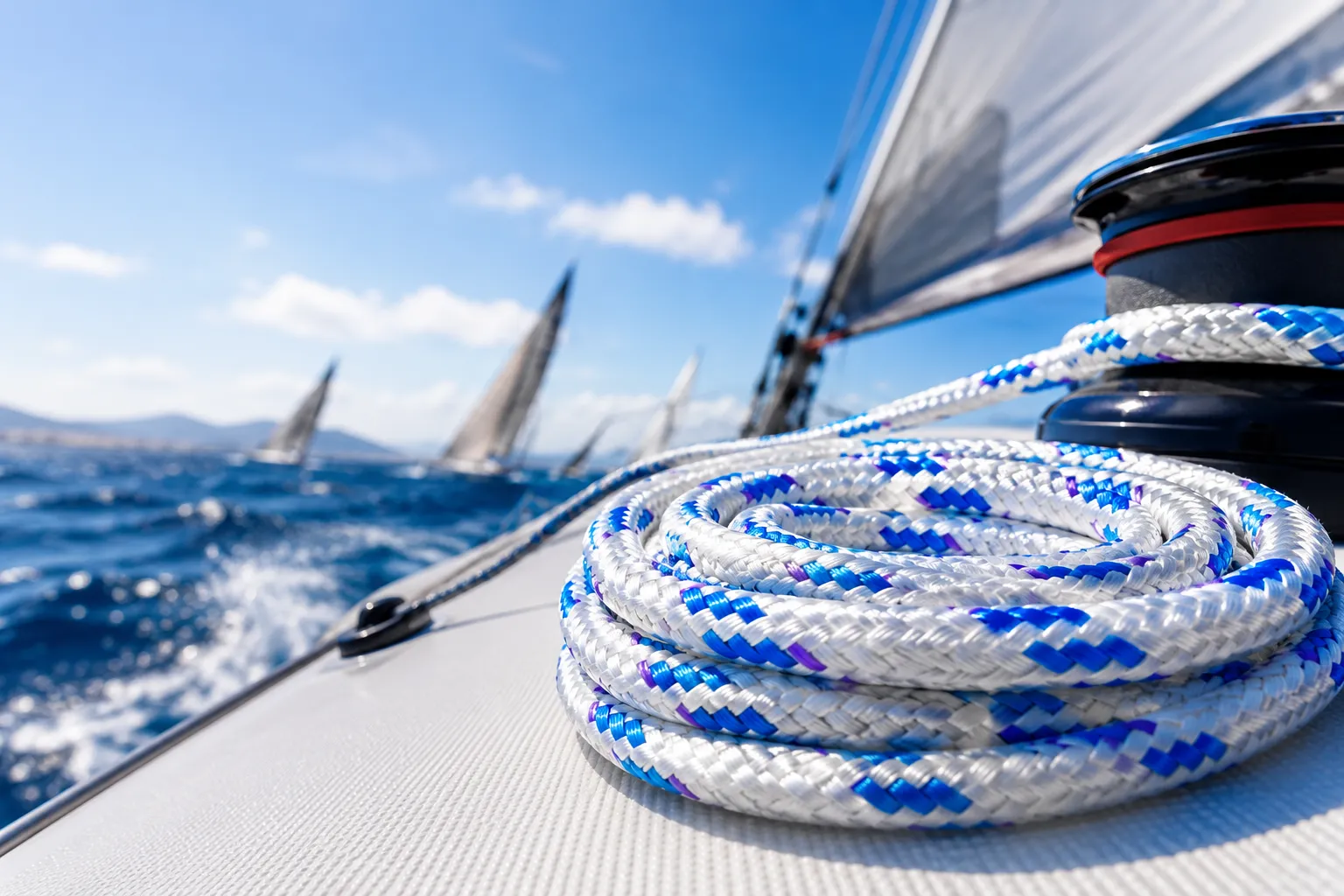
Choosing the right racing rope can be the difference between winning and losing on the water. Whether you're outfitting a club-level dinghy or a grand prix yacht, the lines you select directly affect sail control, boat speed, and crew efficiency. This guide walks through the technical and practical factors that matter most when specifying rope for competitive sailing—so you can make procurement decisions with confidence.
Not all marine-grade rope is built for the demands of racing. Three performance criteria separate racing rope from general-purpose sailing line:
Low elongation – Minimal stretch under load ensures sails hold their shape and respond instantly to trim adjustments.
High strength-to-weight ratio – Lighter lines reduce weight aloft and in the cockpit, improving boat balance and handling.
Durability under cyclic loading – Racing lines are trimmed, eased, and loaded repeatedly, often in wet and UV-exposed conditions.
A rope that excels in one area often involves trade-offs in another. The right choice depends on the specific application on board.
Different positions on a sailboat place different demands on rope. Here's how the primary applications break down:
Halyards require extremely low stretch to maintain luff tension and sail shape, especially in strong winds. A rope that elongates under load effectively reduces your halyard tension, causing draft to migrate aft and costing you pointing ability.
Preferred construction: Dyneema®/UHMWPE core with a durable polyester or coated cover
Typical diameter: 6–12 mm depending on boat size
Key spec: Look for elongation below 1% at 30% of breaking strength
Sheets are handled constantly and need a balance of low stretch, good grip, and flexibility. The priority here is a cover that stays supple in wet conditions while protecting a low-stretch core.
Preferred construction: UHMWPE or blended core with a tight polyester cover; some high-end options add an HMPE outer layer for enhanced abrasion resistance
Typical diameter: 8–14 mm
Key spec: Cover grip quality and abrasion resistance matter more than absolute minimum stretch
Control lines are adjusted less frequently but must deliver precise, repeatable tension. Low stretch ensures the setting you apply stays where you put it.
Preferred construction: Solid UHMWPE core or blended core; some racers use uncovered Dyneema® for weight savings on non-handled lines
Typical diameter: 4–10 mm
Key spec: Minimal creep over time is critical for set-and-forget controls
Dinghies demand ultra-light, low-diameter lines that run freely through small blocks. Weight savings are amplified on small boats.
Preferred construction: Uncovered UHMWPE (e.g., 12-strand) or thin covered lines
Typical diameter: 3–6 mm
Key spec: Weight per meter and flexibility through blocks
The material composition of a racing rope determines nearly all of its performance characteristics. Here is a practical breakdown:
| Material | Strength | Stretch | Weight | UV Resistance | Cost | Typical Use |
|---|---|---|---|---|---|---|
| UHMWPE / Dyneema® / Spectra® | Extremely high | Very low | Very light | Moderate (needs jacket) | High | Cores for halyards, control lines |
| HMPE (High-Modulus PE) | Very high | Very low | Very light | Moderate | Medium–High | Core and cover layers |
| Polyester | Moderate | Moderate | Medium | Excellent | Low | Covers, cruising applications |
| Nylon | Moderate | High | Medium | Good | Low | Not recommended for racing |
| Aramid (Technora® / Kevlar®) | Very high | Very low | Light | Poor (degrades in UV) | High | Specialized cores, limited use |
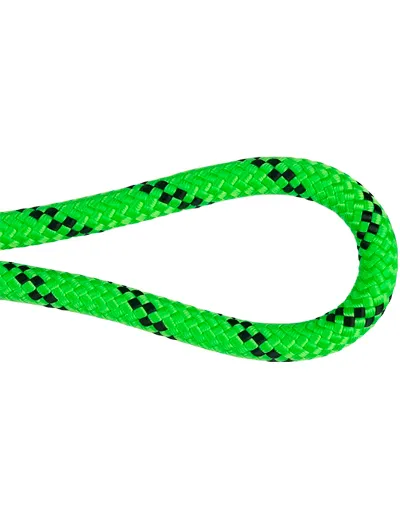
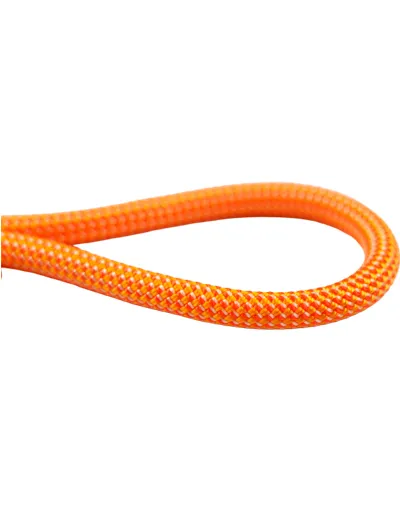
Most high-performance racing rope uses a core-and-cover (kernmantle) construction: a low-stretch, high-strength core carries the load, while a braided cover protects the core and provides grip for handling and winches.
Some key variations:
Single-braid (uncovered): Lightest option, used where the rope runs through blocks but isn't handled much (e.g., halyard tails above the mast exit)
Double-braid with polyester cover: Good all-around durability and grip; common for sheets
Double-braid with HMPE-enhanced cover: Adds an HMPE layer over the cover for superior abrasion resistance and a smoother surface through winches—an approach used in ropes like the Dilu 1.0+, which adds an HMPE overlay to improve both durability and hand feel
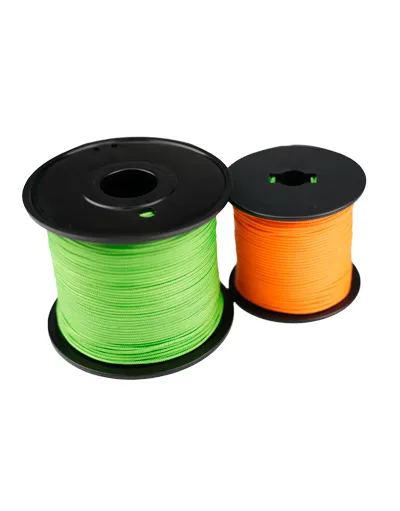
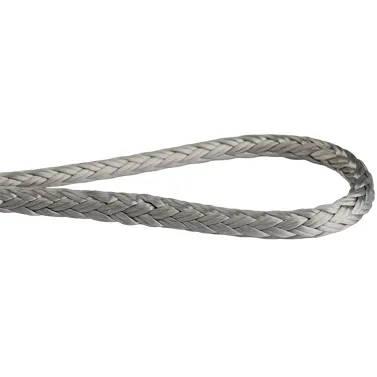
PU-coated 12-strand: Polyurethane-coated UHMWPE single braid offers excellent strength-to-weight with enhanced grip and reduced slip; the Chitu uses this construction for high-load applications
Oversized rope adds weight and may not run smoothly through blocks and clutches. Undersized rope can be difficult to handle, may slip on winches, and has a lower safety margin.
Practical diameter selection guidelines:
| Application | Small Dinghy (Laser, 29er) | Medium Boat (30–40 ft) | Large Yacht (45+ ft) |
|---|---|---|---|
| Mainsheet | 5–6 mm | 10–12 mm | 12–14 mm |
| Headsail sheet | 5–7 mm | 10–12 mm | 12–16 mm |
| Halyard | 4–5 mm | 8–10 mm | 10–14 mm |
| Control lines | 3–5 mm | 6–8 mm | 8–12 mm |
Always verify compatibility with your existing blocks, clutches, and winches before changing diameters.
Manufacturers report elongation as a percentage at a given percentage of breaking strength. Here's how to interpret the numbers for racing:
Below 0.5% at 30% BS: Elite-level performance, ideal for halyards and critical control lines on high-performance boats
0.5–1.5% at 30% BS: Good racing performance for sheets and secondary controls
1.5–3.0% at 30% BS: Acceptable for club racing where budget is a factor
Above 3%: Not recommended for racing applications
Note on creep: UHMWPE fibers exhibit very low elastic stretch but can experience creep—a slow, permanent elongation under sustained load. For halyards that stay tensioned for long periods, look for ropes with creep-resistant fiber grades or pre-stretched construction.
Surface treatments affect how a rope performs in real-world racing conditions:
| Treatment | Benefit | Drawback | Best For |
|---|---|---|---|
| PU coating | Enhanced grip, reduced water absorption, better abrasion resistance | Slightly stiffer initially | High-load lines, winch-driven applications |
| HMPE cover overlay | Extremely low friction, excellent abrasion resistance | Higher cost | Sheets that run through tight fairleads and multiple blocks |
| Polyester cover | Good grip, proven durability, cost-effective | Heavier than HMPE options | All-round racing use, handled lines |
| No cover (bare UHMWPE) | Maximum weight savings, minimal diameter | Poor abrasion resistance, difficult to handle | Non-handled control lines, halyard cores |
Not every line on a race boat needs to be top-spec. A practical approach is to invest in high-performance rope where it counts most and use reliable mid-range options elsewhere.
Worth investing in premium rope:
Halyards (stretch directly affects sail shape and speed)
Primary control lines (cunningham, backstay, vang)
Headsail sheets on boats with complex sail trim
Where mid-range options are sufficient:
Traveler lines
Secondary control lines
Practice sails or training setups
Bulk purchasing tip: If you're equipping a fleet, a team, or a chandlery, ordering a full range from a single manufacturer simplifies logistics, ensures consistent quality, and often unlocks volume pricing. For example, a lineup that spans from lightweight 12-strand UHMWPE (for control lines) through HMPE-enhanced double braids (for sheets) to heavy-duty PU-coated options (for high-load applications) lets you source all racing rope from one supplier.
When specifying racing rope for a team, a fleet, or distribution, look beyond the product spec sheet:
Consistent batch quality – Ask about manufacturing tolerances and quality control processes. Inconsistent elongation between batches can cause setup problems across identical boats.
Material traceability – Reputable manufacturers can identify the fiber source and grade used in each production run.
Testing documentation – Request breaking strength and elongation test reports for the specific batch you're purchasing.
Custom spool lengths and colors – Can the supplier cut and finish to your specifications, including whipped or spliced ends?
Lead times and minimum order quantities – Particularly important for custom orders or non-standard specifications.
Choosing based on price alone – A cheaper polyester line may seem like a value until you lose sail shape in 15 knots and can't point.
Oversizing diameter – Heavier lines slow everything down. If your blocks and winches allow it, go as thin as practical.
Ignoring cover quality – A great core with a poorly constructed cover will fray, slip, and need replacing long before the core gives out.
Assuming all UHMWPE is the same – Fiber grade, construction method, and coatings make significant differences. A PU-coated 12-strand performs differently from an uncoated 8-strand, even with the same fiber type.
Not testing before committing to a full order – Always request sample lengths for your crew to evaluate handling, flexibility, and winch compatibility before placing a bulk order.
It depends on usage intensity and conditions. For competitive racing at the club level, sheets and halyards typically last 1–3 seasons. High-performance programs may replace critical lines annually. Inspect regularly for cover wear, core exposure, stiffness changes, and any signs of strength loss.
You can, but it's a compromise. Cruising rope prioritizes comfort, UV resistance, and longevity. Racing rope prioritizes low stretch, light weight, and responsiveness. If you do both, consider a mid-spec line with a Dyneema® core and polyester cover—it's race-capable while durable enough for cruising.
Uncovered UHMWPE is very slippery and can slip on winch drums, especially when wet. It works well for lines that route through blocks but aren't winched (halyards on boats with rope clutches, some control lines). For winched lines, always use a covered rope or a PU-coated option.
A 12-strand is a single-braid construction—light, strong, and flexible, but without a protective cover. It's ideal where weight matters most and the line isn't handled extensively. A double-braid has a core inside a braided cover, offering better handling, abrasion resistance, and grip. Most racing sheets are double-braid.
Unlike safety/rescue rope, marine rope doesn't have a universal certification standard. Quality is indicated by the manufacturer's testing protocols, material specifications, and warranty terms. Reputable suppliers publish technical data sheets and can provide batch-specific test results.
If you're specifying racing rope for a team, fleet, or distribution channel, the most efficient approach is to discuss your requirements directly with a manufacturer who can offer:
A full product range covering different boat types and positions
Custom lengths, diameters, and color coding
Batch-level testing documentation
Competitive volume pricing
Explore HOATER’s racing rope range or request a sample for hardware and handling evaluation.

 English