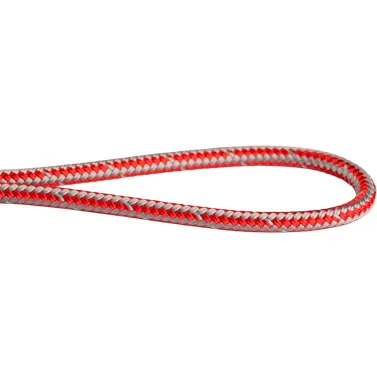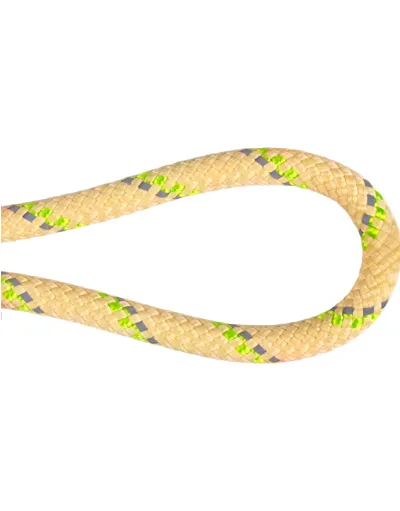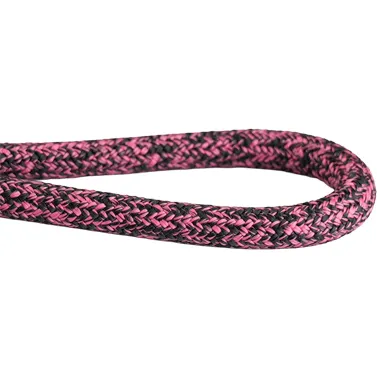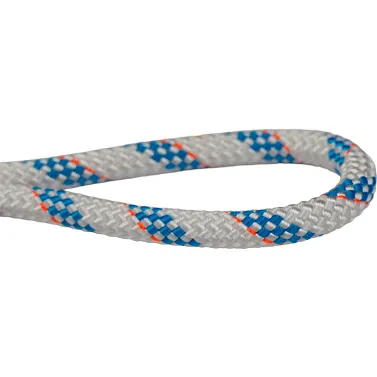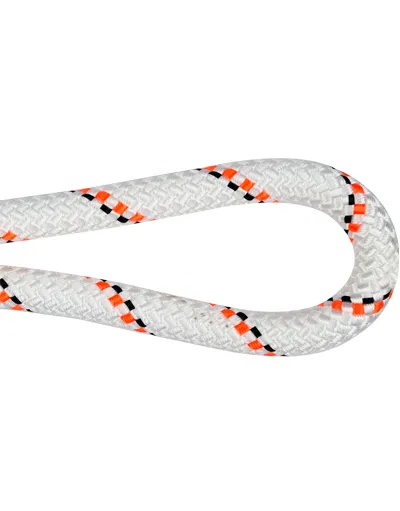
Professional tree work requires a specialized arborist climbing rope—typically a static or semi-static kernmantle rope—engineered to provide low elongation, high abrasion resistance, and compatibility with mechanical climbing systems. Arborists should use static rope, not dynamic rope, for climbing and work positioning due to the controlled nature of their vertical movements and the need for precise load-bearing performance.
At hoater-ropes.com, we design and manufacture certified arborist climbing ropes optimized for tree care professionals, utility contractors, and vegetation management teams who demand reliability, safety, and efficiency in aerial work environments.
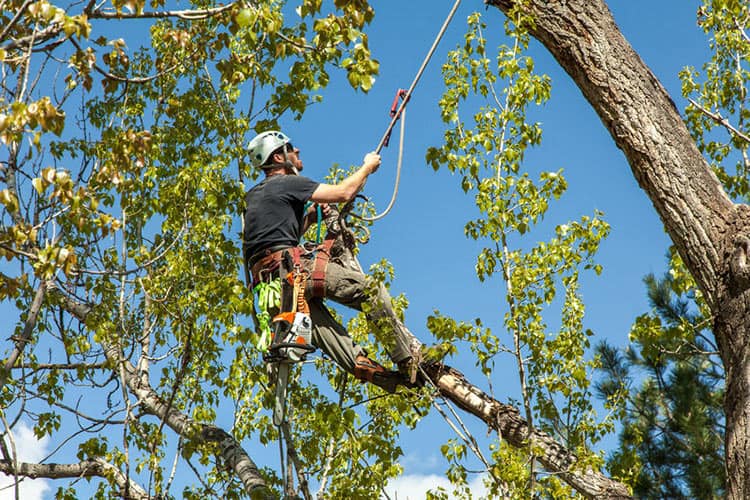
Tree climbing operations require rope that can endure rigorous mechanical wear, friction, and extended exposure to environmental stressors like UV, sap, and moisture. The ideal arborist climbing rope must deliver the following:
Low elongation (<5%) for controlled ascents and work positioning
High sheath durability to resist abrasion from bark and climbing gear
Excellent knot-holding characteristics
Smooth compatibility with ascenders, friction devices, and footlocking
UV- and water-resistant fibers
Diameter compatibility with hardware (typically 11–13 mm)
Static rope (or low-stretch Type A rope under EN 1891) is the industry standard for tree work. Arborists should not use dynamic rope, which is designed for fall arrest in rock climbing but is unsuited to the slow, controlled maneuvers required in arboriculture.
Predictable control during ascents and descents
Precise footlock and body-thrust movement
Minimal bounce, reducing user fatigue and increasing accuracy
Safe work positioning with mechanical devices (e.g., rope wrenches, hitch climbers)
Designed for impact absorption, not work positioning
High elongation (~30%) can cause bounce, inefficiency, and uncontrolled descent
Incompatible with most arborist climbing hardware
Tree workers primarily use two rope access techniques:
| System | Name | Description |
SRT | Single Rope Technique | Rope is anchored and used for ascent/descent along a fixed line. |
DRT | Doubled Rope Technique | A looped rope system where one end moves with the climber and returns through a pulley or branch redirect. |
Your arborist climbing rope must support both techniques—or be specifically designed for one—depending on your climbing system and gear setup.
High strength and abrasion resistance
Low elongation ideal for tree work
Resistant to UV, chemicals, and moisture
Most common material for SRT and DRT climbing lines
Occasionally used in hybrid constructions
Slightly more elongation than polyester
Less common in modern arborist climbing ropes
Used in sheaths for advanced applications (e.g., utility vegetation management near energized lines)
Professional arborist ropes should comply with one or more of the following:
EN 1891 Type A: European standard for low-stretch kernmantle rope
ANSI Z133: U.S. safety standard for arboricultural operations
CE Marking: Indicates compliance with EU safety requirements
NFPA 1983 (for dual-certified lines): For ropes that may also be used in rescue or utility access
At hoater-ropes.com, all arborist climbing ropes meet the latest industry and regulatory standards, and we offer full technical documentation on request.
When sourcing arborist rope for B2B procurement, evaluate based on the following parameters:
11 mm: Lightweight, ideal for SRT specialists using compact gear
11.5–12 mm: Balanced performance for both SRT and DRT
13 mm: Added durability and grip, ideal for manual climbing techniques
Tight-woven braids reduce glazing and wear
Smooth sheaths offer better mechanical device compatibility
Coated or impregnated sheaths extend lifespan in wet or dirty environments
Bright, high-contrast ropes improve visibility in tree canopies
Color coding supports safer job site identification and task segmentation
| Industry | Application |
Tree Service Contractors | Climbing and pruning operations |
Municipal Forestry Teams | Urban tree maintenance and canopy access |
Vegetation Management (Utilities) | Climbing near powerlines and infrastructure |
Arborist Training Schools | Instruction and certification courses |
Environmental Surveyors | Tree canopy data collection and wildlife observation |
For professional tree work, the only acceptable rope is a certified arborist climbing rope engineered to support static climbing techniques (SRT/DRT), mechanical systems, and continuous load-bearing performance in demanding environments. Arborists should use static, not dynamic rope, to ensure safety, precision, and equipment compatibility.
At hoater-ropes.com, we supply industrial-grade climbing rope solutions tailored for commercial arborist operations. Our ropes are available in multiple diameters, color configurations, and construction types—each rigorously tested for durability, elongation, and compliance.
 English