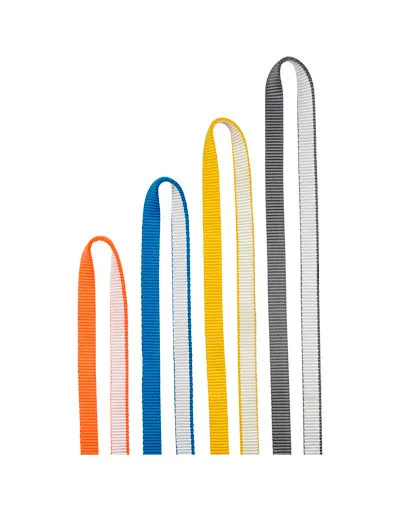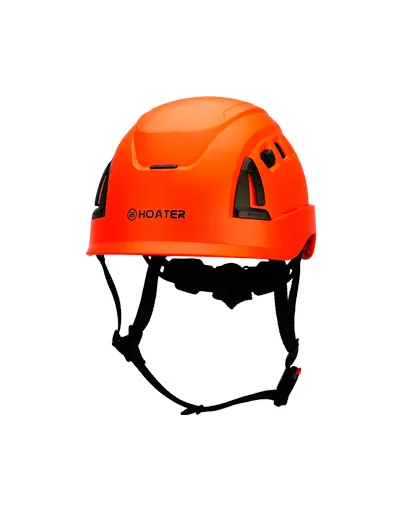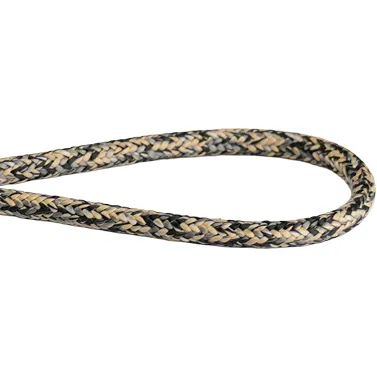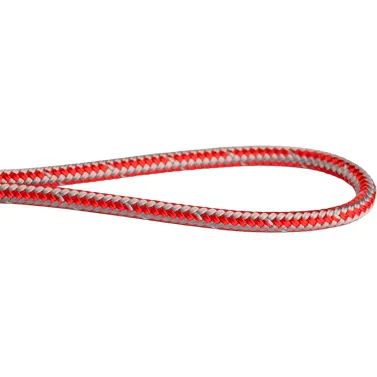
When it comes to military climbing rope, strength, reliability, and performance under extreme conditions are non-negotiable. Among the many synthetic fibers used in defense-grade rope manufacturing, Nylon and Kevlar stand out as the two primary contenders. So — which fiber truly dominates military rope technology?
In short, Kevlar leads in high-tensile strength and heat resistance, making it the go-to for specialized military applications, while Nylon remains indispensable for its superior elasticity and shock absorption — ideal for dynamic climbing and general-purpose field use.

Military ropes are engineered for combat readiness, high-load operations, and environmental durability. Unlike recreational climbing ropes, they must perform flawlessly in:
High abrasion and friction conditions
Extreme temperature ranges
Exposure to chemicals, UV, and water
Rapid deployment and recovery scenarios
These requirements directly influence the fiber selection process — and that's where Nylon and Kevlar each find their niche.
Nylon has been a staple in rope manufacturing since World War II, valued for its balance between strength and flexibility. In military climbing ropes, these properties translate to several operational advantages:
Excellent elasticity (15–30%)
Nylon ropes absorb energy during falls or impact loading — a critical feature during rappelling, rescue, or training exercises.
High abrasion resistance
Ideal for repeated use on rough surfaces like concrete, rock, or metal.
Superior shock absorption
Protects both the user and anchoring systems during sudden load shifts.
Moisture and UV tolerance
Modern coatings significantly improve resistance to degradation from water and sunlight.
Heat sensitivity – Nylon begins to lose strength above 150°C.
Water absorption – Untreated fibers can absorb up to 10% of their weight in water, slightly increasing stretch and weight in humid environments.
Best suited for: training ropes, general-purpose climbing ropes, and rescue lines where dynamic performance and safety are prioritized.
Developed by DuPont, Kevlar (aramid fiber) revolutionized high-strength rope design. Its use in military climbing rope is driven by operational needs that exceed the limits of Nylon.
Incredible tensile strength-to-weight ratio
Kevlar ropes are up to five times stronger than steel by weight, making them ideal for compact, lightweight tactical kits.
Minimal elongation (<2%)
Provides exceptional control in precision applications — such as static lines, rappelling, or fast-rope insertions.
High thermal stability
Retains strength at temperatures exceeding 400°C, making it resistant to frictional heat and flame exposure.
Chemical and abrasion resistance
Performs well in contact with oils, fuels, and saltwater — common in military and marine environments.
Low flexibility – Kevlar's rigidity can cause difficulty in knotting or coiling.
Poor UV resistance – Requires protective sheaths or coatings to prevent degradation.
Limited dynamic capacity – Not suitable for energy-absorbing tasks (e.g., climbing falls).
Best suited for: static climbing ropes, winch lines, fast-roping systems, and any application demanding minimal stretch and maximum load-bearing reliability.
| Property | Nylon | Kevlar |
Tensile Strength (MPa) | 650–950 | 3,000–3,600 |
Elongation at Break | 15–30% | <2% |
Melting Point | ~250°C | Decomposes at ~480°C |
Abrasion Resistance | Excellent | Excellent |
UV Resistance | Good (with coating) | Poor (requires protection) |
Water Resistance | Absorbs moisture | Minimal absorption |
Dynamic Use (Shock Absorption) | Excellent | Poor |
Static Load Stability | Good | Outstanding |
Cost | Moderate | High |
Training and obstacle courses
Rescue and evacuation systems
Mountaineering and dynamic climbing
Load securing and utility applications
Fast-roping from helicopters
Static line rappelling
High-temperature or chemical environments
Communications cable reinforcement and tether systems
In practice, many military climbing ropes combine both fibers — for example, Kevlar cores for static strength paired with Nylon sheaths for handling comfort and abrasion protection.
The next generation of military ropes integrates hybrid fibers such as Technora®, Vectran®, and Dyneema®, offering improved thermal resistance, lighter weight, and tailored elasticity profiles. Manufacturers are also developing protective coatings and woven sheath technologies that enhance UV and chemical resistance — extending rope lifespan in harsh conditions.
As military and tactical demands evolve, rope engineering increasingly focuses on multi-layer composite designs — achieving a balance of flexibility, strength, and durability once thought impossible.
So, which fiber dominates?
Kevlar dominates in high-load, static, and extreme-temperature operations — where failure is not an option.
Nylon remains essential for dynamic climbing, training, and rescue work, offering safety and comfort where flexibility matters most.
In essence, Kevlar leads in performance, but Nylon wins in versatility — and the smartest military rope systems leverage both fibers to deliver unmatched operational reliability.
For defense contractors, tactical gear suppliers, and industrial rope distributors, understanding these material differences is critical to sourcing the right military climbing rope.
Selecting between Nylon and Kevlar should always be based on mission profile, environmental conditions, and safety standards — not just raw strength. When engineered correctly, both fibers can deliver the uncompromising performance demanded by modern military forces.


 English