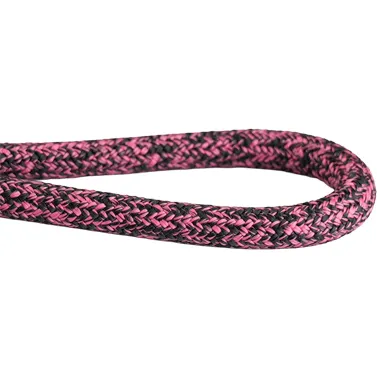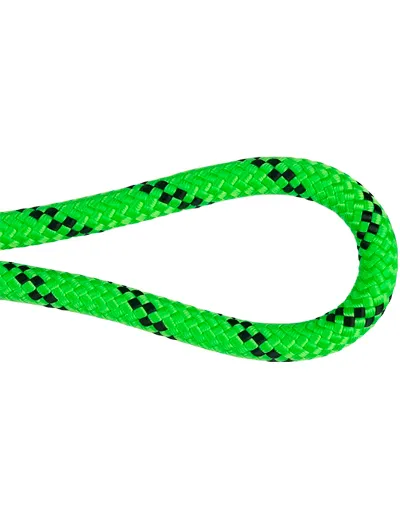
When selecting a synthetic fiber rescue rope, the choice of material directly determines its performance, safety, and operational lifespan. Each fiber — Nylon, Polyester, Polypropylene, and Kevlar — brings unique mechanical and chemical properties suited to specific rescue, industrial, and tactical applications.
This article provides a technical comparison of these four key fibers from the perspective of rope manufacturing and B2B industrial procurement, offering clear guidance for decision-makers in firefighting, military, marine, and construction sectors.
In a synthetic fiber rescue rope, the fiber is not merely a raw material — it defines the rope's tensile strength, elongation, heat resistance, and ability to perform in life-critical situations.
Different rescue scenarios — from confined-space extractions to high-angle firefighting — demand ropes that can endure specific stresses: heat, abrasion, UV exposure, or chemical contact. Thus, fiber selection is a strategic design decision, not just a material choice.
| Fiber Type | Strength | Stretch | Heat Resistance | Chemical Resistance | Typical Applications |
Nylon | High | Moderate to High | Moderate | Moderate | Dynamic rescue ropes, climbing, towing |
Polyester | High | Low to Moderate | High | Excellent | Marine, static rescue, industrial hauling |
Polypropylene | Moderate | Moderate | Low | Excellent | Water rescue, floating lines |
Kevlar (Aramid) | Very High | Very Low | Excellent | Good | Firefighting, military, high-temp rescue |
Nylon is one of the most versatile synthetic fibers in rope production and remains the top choice for energy-absorbing rescue ropes.
High elongation (15–30%) – Ideal for absorbing shock loads during sudden falls or impacts.
Excellent tensile strength-to-weight ratio – Supports heavy loads without excessive bulk.
Superior abrasion resistance – Withstands friction from pulleys, edges, or anchor points.
Moisture absorption (up to 10%) can reduce strength and increase weight.
Thermal softening starts around 180°C, limiting use near flames or hot surfaces.
Dynamic synthetic fiber rescue ropes in mountaineering, urban rescue, and confined-space recovery where controlled stretch prevents system overload.
Polyester fibers offer excellent strength and low stretch, making them the most stable material for static rescue ropes.
Minimal elongation (<10%) – Ensures consistent performance under sustained loads.
Outstanding UV, abrasion, and chemical resistance – Performs well in outdoor and marine environments.
Low moisture absorption – Retains strength and dimensional stability when wet.
Slightly stiffer feel compared to nylon, making knot handling less smooth.
Not ideal for fall-arrest systems requiring dynamic performance.
Ropes used in industrial rescue systems, marine recovery, and utility applications, where stability and longevity are essential.
Polypropylene (PP) ropes are valued for their buoyancy and chemical resistance but are generally considered secondary-grade rescue materials due to lower strength and heat tolerance.
Lightweight and floats on water – Ideal for marine and flood rescue operations.
Excellent resistance to acids, alkalis, and solvents – Maintains integrity in contaminated environments.
Low cost – A practical choice for disposable or short-term use ropes.
Low melting point (~165°C) – Unsuitable for high-temperature or friction-heavy rescue work.
Lower tensile strength compared to Nylon and Polyester.
UV degradation occurs without protective coatings.
Water and swift-water rescue ropes, where buoyancy, flexibility, and affordability are more important than heat or abrasion resistance.
Kevlar (Aramid) represents the upper tier of synthetic fiber rescue rope technology, delivering unparalleled performance in environments that challenge all other fibers.
Exceptional tensile strength – Up to 3,600 MPa, making it five times stronger than steel by weight.
Minimal stretch (<2%) – Provides precision and control in static systems.
High heat and flame resistance – Withstands temperatures exceeding 400°C without melting.
Excellent cut and abrasion resistance – Ideal for harsh terrain or sharp-edge exposure.
Poor UV stability – Must be shielded by a protective sheath.
Stiff handling characteristics – Not ideal for frequent knotting or coiling.
Higher cost – Reserved for mission-critical and specialized applications.
Firefighting, military rescue, and industrial high-temperature environments, where reliability under extreme conditions is non-negotiable.
When selecting the right synthetic fiber rescue rope, the decision depends on mission type, environment, and mechanical demand.
| Application | Recommended Fiber | Rationale |
High-angle / confined-space rescue | Nylon | High elasticity for fall arrest and dynamic loads |
Industrial & static rescue systems | Polyester | Low stretch and stable load handling |
Marine & water rescue | Polypropylene | Floats on water and resists chemicals |
Firefighting & tactical rescue | Kevlar | Heat, abrasion, and cut resistance |
For industrial buyers, fiber performance is only half the equation — the rope's construction method also dictates real-world usability.
Core-sheath design: Protects load-bearing fibers and improves handling.
Heat treatment and pre-shrinking: Stabilize fiber structure to prevent elongation drift.
Coatings and finishes: Extend UV resistance and moisture control, especially for PP and Kevlar ropes.
Compliance standards: Ensure ropes meet NFPA 1983, EN 1891, or ISO 2307 standards for professional rescue applications.
Working with a manufacturer that offers custom fiber blends, diameter options, and protective coatings can significantly enhance rope lifespan and performance consistency in demanding rescue environments.
The latest advancements in fiber technology are pushing performance boundaries even further:
Hybrid aramid-polymer cores combine Kevlar's strength with Nylon's elasticity.
Nano-coating technologies improve UV resistance and hydrophobic properties.
Recyclable fibers and bio-based polyesters are emerging as sustainable alternatives for environmentally conscious buyers.
As material science evolves, we're seeing lighter, stronger, and more specialized rescue ropes designed to meet the exacting standards of modern emergency response and defense operations.
Each synthetic fiber serves a unique purpose in the rope manufacturing spectrum:
Nylon for shock-absorbing performance,
Polyester for static stability,
Polypropylene for buoyancy and chemical resistance,
Kevlar for extreme durability and heat protection.
Choosing the right fiber for your synthetic fiber rescue rope depends on understanding both application demands and environmental challenges.
For B2B buyers, this isn't just a material choice — it's a decision that defines safety, operational reliability, and long-term value.
 English