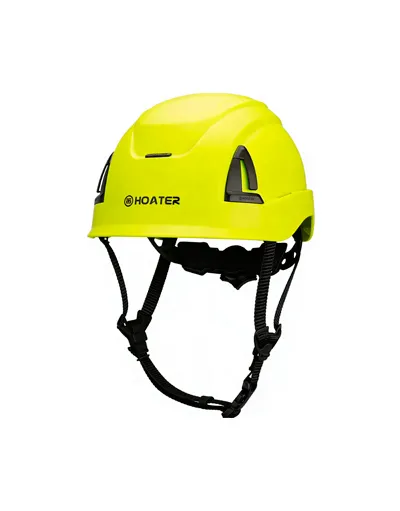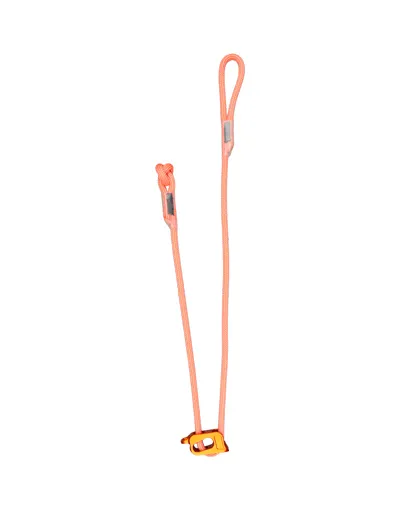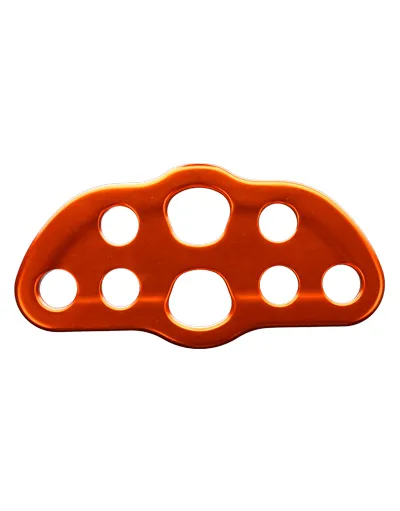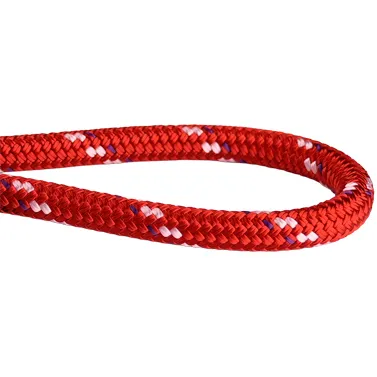
A suitable SRS climbing line sits inside several limits at the same time. Its nominal diameter must fit the device, its construction must interact predictably with friction components, its elongation must support controlled positioning, and its certification and test evidence must match the buyer's market.
Diameter alone never proves compatibility. Device manufacturers publish ranges, but users must still follow the current instructions, inspect the full system and perform a low-and-slow function test before leaving the ground. This guide shows how a distributor, tree-care company or OEM buyer can turn those safety checks into a precise rope specification.

A static rope for tree climbing is a low-stretch life-safety line selected for controlled ascent work positioning and descent in a tree-care system.
In European product language, many relevant lines are low-stretch kernmantel ropes assessed to EN 1891 rather than perfectly non-stretching ropes. Some arborist products use double-braid constructions. The buyer should name the construction and standard instead of using static as the only technical requirement.
HOATER publishes a separate EN 1891 guide that explains Type A and Type B rope requirements. For an RFQ, record the exact standard and type shown on the product documentation, then confirm that the intended device and technique accept that rope category.
An SRS compatibility range is the set of rope diameters constructions and operating conditions that a device manufacturer permits for a stationary rope system.
The Petzl ZIGZAG PLUS product information lists rope compatibility from 11.5 to 13 mm, EN 1891 Type A low-stretch kernmantel ropes and a 140 kg working load limit. The Notch Rope Runner Pro sales sheet lists 11 to 13 mm rope compatibility and a 140 kg working load limit. These published ranges are screening limits, not an approval of every rope within the numbers.
System component | Published range | What the buyer must still verify |
Petzl ZIGZAG PLUS | 11.5 to 13 mm and EN 1891 Type A | Current instructions complete system configuration rope condition and low-level function |
Notch Rope Runner Pro | 11 to 13 mm | Current manual friction setting user mass environmental conditions and function test |
HOATER NianLun Pro | Nominal 11.7 mm | Final behavior in the selected device and market-specific documentation |
HOATER CanTian Pro | Nominal 12.5 mm | Final behavior in the selected device and market-specific documentation |
A nominal fit can still behave differently because cover firmness, braid pattern, contamination, moisture, temperature and wear affect friction. Never infer that a rope is approved solely because its printed diameter lies within a device range.
A diameter comparison is an evaluation of how two rope sizes change mass handling device fit and published mechanical performance for the intended climbing system.
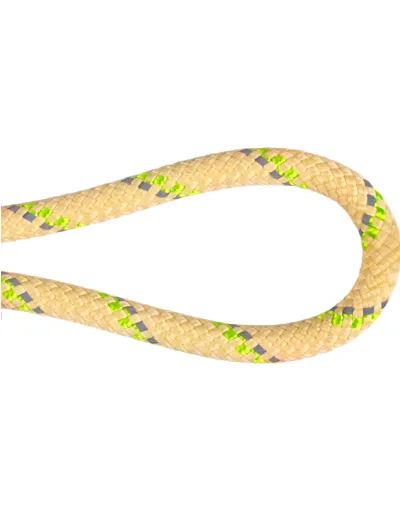
The HOATER tree work rope range includes NianLun Pro 11.7 mm and CanTian Pro 12.5 mm. Their public specifications provide a direct size comparison without assuming that the thicker option is automatically better for every user.
Published value | NianLun Pro 11.7 mm | CanTian Pro 12.5 mm | Practical reading |
Breaking strength | 28 kN | 34 kN | Use the documented system design and applicable standard rather than selecting by headline strength alone |
Static elongation | 2.50 percent | 2.50 percent | Published elongation is the same for both products |
Mass | 95 g per m | 108 g per m | The difference is 13 g per m or 0.78 kg over 60 m |
Construction | 24-plait double braid polyester cover polyamide core | 24-plait double braid polyester cover polyamide core | Similar construction narrows the comparison to size mass strength and handling |
Certification shown | EN 1891 Type A | EN 1891 Type A | Confirm the current certificate and product identity for the quoted lot |
Review the exact NianLun Pro 11.7 mm specification and CanTian Pro 12.5 mm specification before requesting samples. Published nominal values should be matched to the latest technical sheet and the physical sample supplied for approval.
Friction behavior is the way a rope bends grips releases and generates heat as it moves through a climbing device hitch or redirect under load.
A firmer line may feed cleanly through one device but feel abrupt in another. A softer line may knot well but flatten more under a cam or bollard. Water, sap, dust, sheath wear and low temperature can change the same rope's response. The approval process should therefore test new, conditioned and representative in-service samples when the risk assessment requires it.
The rope must also fit the complete path. Measure or verify the cambium saver, pulley, friction device, ascender, foot loop interface and termination. An acceptable primary device range does not remove the need to check every other component's instructions.
A low and slow verification protocol is a controlled near-ground test that confirms installation locking release ascent descent and stopping behavior before normal climbing begins.
Use only trained competent personnel and the current instructions for every component. Start with visual and tactile inspection, confirm rope identity and diameter, install the system exactly as specified, then load it close to the ground with a backup appropriate to the procedure. Check that the device locks, advances, descends and stops without unintended slip.
Repeat the check after changing rope, device settings, configuration or environmental conditions. Record the rope model, batch or serial information when available, device model, settings, user mass range, test date and result. A failed or uncertain test stops the approval process; it is not solved by moving immediately to a higher anchor.
SRS rope retirement is the removal of a climbing line when its history condition or performance no longer meets the organization's written acceptance criteria.
Inspect the complete rope before use and give extra attention to termination zones, device travel paths, redirects and sections that repeatedly contact bark. Look for cuts, glazing, pulled cover yarns, unusual stiffness, soft spots, diameter changes, contamination and core-cover movement. Track any severe loading or event that could have affected the line.
The Cordage Institute CI 2001 guideline provides a recognized framework for fiber rope inspection and retirement criteria. An employer or professional user should combine that general framework with the rope manufacturer's instructions, device instructions, applicable law and the organization's risk assessment.
An OEM arborist rope specification is a controlled document that defines the product identity performance test methods finishing packaging and evidence a supplier must deliver.
Specification field | What to state in the RFQ | Acceptance evidence |
Use and market | SRS or MRS application target region and professional user profile | Risk assessment and applicable standard list |
Construction | Kernmantel or double braid fiber types braid pattern and finish | Technical data sheet and material declaration |
Dimensions | Nominal diameter tolerance length and mass per meter | Lot measurement report |
Mechanical performance | Minimum breaking strength elongation and any knot or termination requirement | Named test method and lot test record |
Compatibility | Devices and published diameter ranges to be screened | Sample system trial under controlled procedure |
Finished product | Colors markers spliced eye options labels packaging and traceability | Approved sample and packaging artwork |
HOATER describes tensile dynamic abrasion knotability water and environmental checks on its rope testing page. Buyers should request the exact test method and report that applies to the quoted product. A category page or certificate image is useful for screening, but it does not replace product and lot identification.
A technical sourcing decision is the documented choice of a rope and supplier after specification review sample testing evidence review and commercial evaluation.
HOATER Ropes publishes comparison-ready specifications for its 11.7 mm and 12.5 mm tree work lines, including breaking strength, static elongation, mass and certification type. That information helps a buyer create a short list, but the approval remains system-specific.
Send the intended device list, market, rope length, quantity, color, termination, documentation needs and sample protocol through the HOATER contact page. The resulting quotation should identify the exact product, specification revision, test evidence and acceptance steps rather than offering only a diameter and price.
A defensible SRS rope selection is a documented match among rope specification device instructions user conditions and verified system behavior.
Use diameter to narrow the candidates, then compare construction, elongation, mass, certification, handling and evidence. NianLun Pro 11.7 mm and CanTian Pro 12.5 mm provide two clearly specified HOATER options for evaluation. Neither should enter service until the buyer completes the applicable document review and a controlled compatibility test.
This FAQ is a set of practical answers buyers and operators need before selecting inspecting or replacing the rope discussed in this guide.
No. Static is commonly used as shorthand for low-stretch rope. The actual elongation must be stated by the manufacturer and interpreted under the named test method and load conditions.
Petzl publishes an 11.5 to 13 mm range and specifies EN 1891 Type A low-stretch kernmantel rope. Users must follow the current technical notice and verify the complete configuration before use.
The cited Notch sales sheet lists an 11 to 13 mm rope range and a 140 kg working load limit. The current instructions and system test control the final decision.
Neither size is universally better. The 11.7 mm HOATER line is lighter, while the 12.5 mm line has a higher published breaking strength. Device range, grip preference, system friction and documentation decide the better fit.
The published mass is 108 g per m for CanTian Pro and 95 g per m for NianLun Pro. The difference is 13 g per m, which equals 0.78 kg across a 60 m length.
Request the technical data sheet, exact standard and type, test methods, lot or sample report, material declaration, dimensions, traceability, finishing details and packaging specification. Then test the sample in the intended system under a documented procedure.

 English